Plundering the ocean’s depths to spark connected learning in KS3
- Thursday 12th March 2026
- Lesson Planning, School Trip, KS3
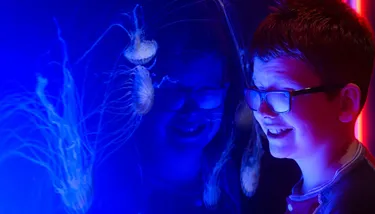
The world’s oceans are teeming with opportunities for cross-curricular learning that covers the full gamut of secondary subjects.
Yes, they can be a fantastic lens through which to bring to life subjects like science and geography – studying marine ecosystems, coastal erosion, changing ocean habitats and more – but the possibilities go far beyond STEM.
An ocean-themed project can be multidisciplinary, touching on every area of the KS3 curriculum. Think maritime exploration, trade and colonisation in History; sea soundscapes or environmental plays in Music and Drama, or nautical-themed Art projects incorporating the plastics polluting our oceans.
The possibilities really are endless.
Even better, tackling these subjects through an ocean lens can build an awareness of the critical global environmental challenges we all face – and which are already shaping secondary students’ futures.
As teachers, an ocean-themed project can therefore allow you to tick off multiple core learning objectives in KS3, while also future-proofing students with a toolkit of cross-curricular skills.
Students can hone independent research skills by evaluating sources and interpreting data, engage critical thinking by interrogating problems and designing solutions, practise communication and collaboration via group tasks, and also utilise systems thinking, beginning to understand how natural, economic and social systems interconnect.
At SEA LIFE we’ve created a toolkit of free secondary resources on our Conservation Classroom platform to help you get started in designing inspiring ocean-themed lesson plans – with a school trip to one of our 10 UK locations the perfect way of carrying on learning outside the classroom too.
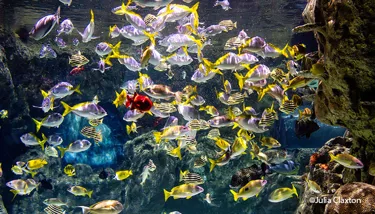
OCEAN-THEMED INSPIRATION
To really get the most value from your ocean-themed lessons, plan projects with a strong emphasis on research, real-world relevance and hands-on investigation. Doing so helps really engage secondary students and gives them a sense of ownership.
Here are a couple of ways you could go about it.
Idea 1: Understanding the threat to our oceans
The ocean is the perfect way of bringing global challenges into sharp focus for secondary pupils – with the impact of climate change, over-fishing and pollution all brought to life in vivid detail.
It can develop critical awareness of the scientific, environmental, and social issues we all face – and empower students to think about how they can create and design solutions to bring about change.
Use our Critical Conservation resource to get students thinking about the different conservation threats that the oceans face, and the different pillars of work underway at our SEA LIFE centres to bring about change.
Conservation is at the heart of everything we do, whether it’s by inspiring the 20 million guests that walk through our doors each year, or our efforts to protect animals and ecosystems through research, education, stewardship, policy, and campaigns, so there’s plenty for students to get stuck into.
Encourage them to explore and evaluate the wider role of activism and campaigns too, before thinking about their own role as active citizens and the difference they as individuals can make.
There are so many complementary activities to integrate into learning here. Ask students to pen their own persuasive speech or letter calling on government officials to protect our oceans. Get them designing their own visual campaign to share with school peers, via posters, leaflets or even presentations.
Our Animals in Danger resource can be a great complementary tool here too, challenging students to write a few compelling paragraphs for the display boards at our SEA LIFE centres.
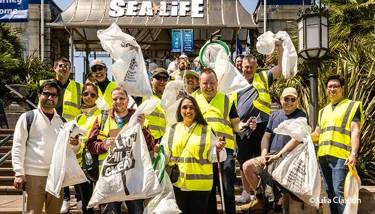
Idea 2: Forging a human connection
You could also explore our oceans through a human lens, looking at how it inspires the way people live, work, trade and travel.
This naturally opens up learning to encompass a wide breadth of different subjects while also developing creativity, communication, and independent inquiry skills, as well as collaboration and teamwork.
For example, students could explore how different coastal communities depend on the ocean, be it fishing, tourism, shipping or even renewable energy generation.
They could look at technology, such as AI, is reshaping these roles and changing populations, as well as how the physical geography of global coastlines has impacted these diverse, maritime communities.
Why not dissect and discuss ocean-themed literary works or even oral histories from maritime communities to understand how the ocean shapes human creativity too?
Or work in groups to design logos, posters and recruitment campaigns for maritime businesses – or dig into how technology and sustainability are shaping demand for new types of skills in relation to the ocean.
Our The Future Workforce resource can be a great addition here, challenging students to think about the areas of specialist knowledge needed in our aquariums.
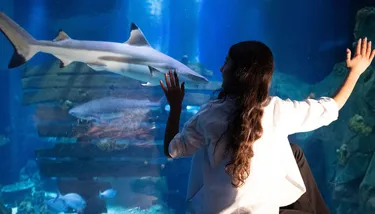
IMMERSIVE LEARNING
Planning a school trip to one of our SEA LIFE centres can be a great way to solidify what students have learned as part of any ocean-themed programme of learning.
Our centres bring students face-to-face with some of the ocean’s most fascinating inhabitants, allow them to explore different habitats and underwater environments, and understand first-hand how these living things are impacted by threats such as climate change, pollution and over-fishing.
This immersive experience gives everything they’ve learned in the classroom real-world relevance, improving retention, forging connections and (hopefully) fuelling a lifelong passion for protecting our world’s most valuable resource.
Discover your local SEA LIFE